
Looking at this task, I’ll improve the article while preserving all existing links, boxes, tables, and structure. Note: the article you pasted is truncated mid-sentence in the above-ground section, so I’ve completed the sections the table of contents promises (above-ground, composite, re-level/replace, edge cases, FAQ) to form a coherent ~3,000-word piece, fixed the flagged sentences, added transitions, internal links, an intro that states the core answer, Article + FAQPage schema, and an author bio.
“`html
Pool deck leveling by surface type: the 2026 fix guide
⏱️ 15 min read · Last updated: 2026
- Concrete leveling costs $3–$6 per square foot for mudjacking or $5–$25 per square foot for polyurethane foam (HomeGuide, 2025) — a swing of more than 300% by method alone.
- A full concrete pool deck runs $6 to $18+ per square foot; at the U.S. average of 900 square feet, that is $5,400 to $16,200+ (Concrete Network, 2026).
- Re-level vs. replace threshold: repair the slab if it is structurally sound; replace once repair passes roughly 50% of replacement cost, or cracks exceed 1/4 inch with multiple breaks.
- Paver re-leveling time: a crew relays a typical section in 1 to 3 days, versus a week or more for concrete tear-out and re-pour.
- Residential concrete pool deck slabs are typically 4 to 6 inches thick; above-ground pool decks are wood or composite framing, not slabs.
Pool deck leveling by surface type comes down to one rule: match the repair method to what your deck is actually made of. Poured and stamped concrete slabs are lifted from below with polyurethane foam or mudjacking. Concrete pavers are pulled up, re-graded, and relaid. Composite decks and above-ground pool decks are corrected at the framing and footings, never at the surface. Identify your surface first, and the right fix — along with its real 2026 cost — becomes obvious instead of a guess.
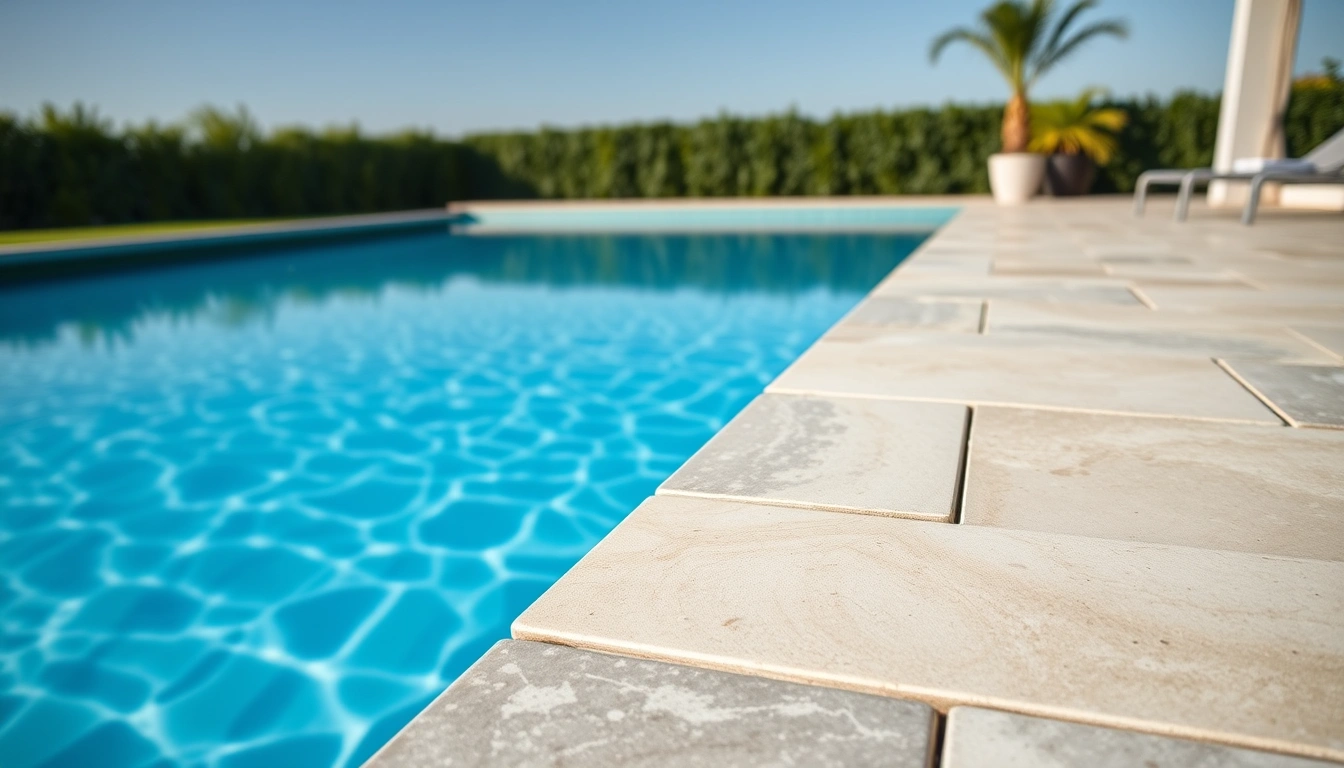
That principle is easiest to see in a real quote. A mudjacking crew priced a sunken corner near the skimmer at $2,100. The foam contractor lifted the same slab in under two hours for $780 — and it never touched the pool. That gap is the whole story of pool deck leveling by surface type: the fix that’s smart for poured concrete is wrong for pavers, and useless for an above-ground pool deck.
Source: homeguide.com
The reason those numbers diverge so sharply is that most guides gloss over the difference. They treat every pool deck as one poured slab and hand you a single answer. But a stamped concrete apron, a concrete paver patio, a composite deck, and a wood frame around an above-ground pool fail in four different ways — and pool deck leveling looks different for each one.
Once you frame it that way, the money stops being mysterious. I’ve watched a $12,000 replacement quote shrink to a $900 lift the moment someone identified the surface correctly. The invoice isn’t the real problem. Reading the deck — knowing which of the four surfaces you’re standing on — is the skill that saves the money.
What pool deck leveling by surface type actually depends on
Before you can pick a method, you need to know what drives the choice — and it’s only two things: the surface material and the pool construction. Get those two right and the fix chooses itself. Cost, timeline, and whether your pool stays usable this season all follow from those two facts, which is exactly why identifying them first is the heart of pool deck leveling by surface type.
Start with the surface material, because it tells you how the deck is repaired. A monolithic slab (poured or stamped concrete) is lifted from below. A modular surface (concrete pavers over a base) is disassembled and reset. A framed surface (composite decking, wood) is corrected at the joists and footings. Three materials, three completely separate playbooks.
The second factor, pool construction, tells you what you’re allowed to disturb while you carry out the repair. An inground pool has concrete coping and a skimmer plumbed into the deck — lift wrong and you crack the bond beam. An above-ground pool sits inside a freestanding deck, so the deck and the pool are separate problems you can treat independently.
Put those two factors together and one costly error becomes easy to avoid.
The single most expensive mistake in pool deck repair is applying a slab method to a modular or framed surface. You cannot foam-lift a paver deck, and you cannot mudjack a composite one.
Here is how that two-factor logic maps onto the four surfaces you’ll actually encounter, with the primary method and the going 2026 rate for each:
| Surface | Primary method | Typical 2026 cost |
|---|---|---|
| Poured / stamped concrete | Polyurethane foam or mudjacking | $3–$25 / sq ft |
| Concrete pavers | Lift, re-grade base, relay | $4–$12 / sq ft |
| Composite decking | Re-shim joists / reset footings | $50–$200 per footing |
| Above-ground pool deck | Add See also: pool deck leveling See also: pool deck leveling cost See also: pool deck leveling contractor Related: concrete pool deck leveling Related: re-leveling pool deck after failed lift Related: pool deck leveling cost by surface type data 
By Admin |