Pool coping and waterline settling repair done right
⏱️ 8 min read · Last updated: 2026
Pool coping and waterline settling repair fixes a sunken deck edge without tearing out sound coping. If the coping and shell are still structurally sound, the right fix lifts the settled slab back to grade, restores the expansion joint, protects the bond beam, and checks skimmer alignment. This article explains when that repair works, how to do it safely, and when replacement is the better choice.
- Keep the expansion joint at the coping a consistent 1/2 inch wide so it can flex as the deck and shell move separately.
- Keep injection points at least 12 inches back from the pool shell to avoid loading the bond beam.
- Realign the skimmer so its throat sits within about 1/8 inch of level.
- Replace polyurethane expansion joint sealant every 3–5 years to prevent edge settling from returning.
- Concrete coping lasts 15–25 years and natural stone over 30 years, per HomeGuide (2026); most pool repairs run $3–$25 per square foot.
Why does the pool deck sink right next to the coping?
The pool deck sinks next to the coping because the soil under the deck settles while the bond beam under the coping stays stable. The coping sits on the pool’s reinforced structural collar, while the deck sits on backfill that can compact, wash out, and drop.
That difference creates a visible step at the water’s edge. The coping stays in place, and the deck falls away from it. Water usually makes the problem worse because a cracked or dried-out expansion joint lets pool splash and rain run behind the coping.
As the joint fails, the void grows and the deck settles more. In most cases, edge settling starts as a drainage problem before it becomes a soil problem.
Nine times out of ten, edge settling at the coping is a drainage failure first and a soil failure second. Fix the joint and you stop feeding the void.
If your whole deck has tilted or multiple slabs have dropped, that is a broader leveling job. For that type of problem, see pool deck leveling by surface type. The coping-edge version is narrower and usually easier to correct.

How the coping and bond beam work together in pool coping and waterline settling repair
In pool coping and waterline settling repair, the coping is the cap and the bond beam is the structure that supports it. The bond beam is the thick, steel-reinforced top edge of the pool shell, usually 8 to 12 inches deep, and it carries the coping around the pool perimeter.
The deck is different. It is not meant to bond rigidly to the shell. A flexible expansion joint sits between the deck and coping so the deck can expand, contract, and settle without prying against the pool structure.
When that joint dries out and hardens, the deck and coping lock together. Then deck movement transfers stress into the bond beam, which is exactly what this repair must prevent.
This is why pool coping and waterline settling repair is really a seam repair. The deck and the coping share one edge, but they do not move the same way. If the seam is wrong, the shell pays for it.
Is it safe to lift concrete next to the pool shell?
Yes, lifting concrete next to the pool shell is safe when the crew keeps injection points away from the shell and controls pressure carefully. A good rule is to keep injection holes at least 12 inches back from the pool wall and never inject directly under the bond beam.
Polyurethane foam leveling, including systems like PolyLevel, is safer than traditional mudjacking here because it is lighter and can be raised in small increments. In pool coping and waterline settling repair, the safest lifts are measured in small steps, with the coping line and waterline tile watched closely as the deck rises.
| Safety parameter | Correct | Risky |
|---|---|---|
| Injection distance from shell | 12 in. or more back from the wall | Under the bond beam |
| Lift increment | ~1/8 in. per pass, monitored | Fast, single-shot lift |
| Water in pool | Full — adds ballast against the shell | Drained during lift |
| Pool type | Gunite / concrete shell | Vinyl-liner edge without care |
Keep the pool full during the lift. The water weight pushes back against the shell and gives you a margin of safety the foam cannot overcome. For the deck field away from the edge, the same method is covered under concrete pool deck leveling.
How do you fix a gap between the coping and the deck?
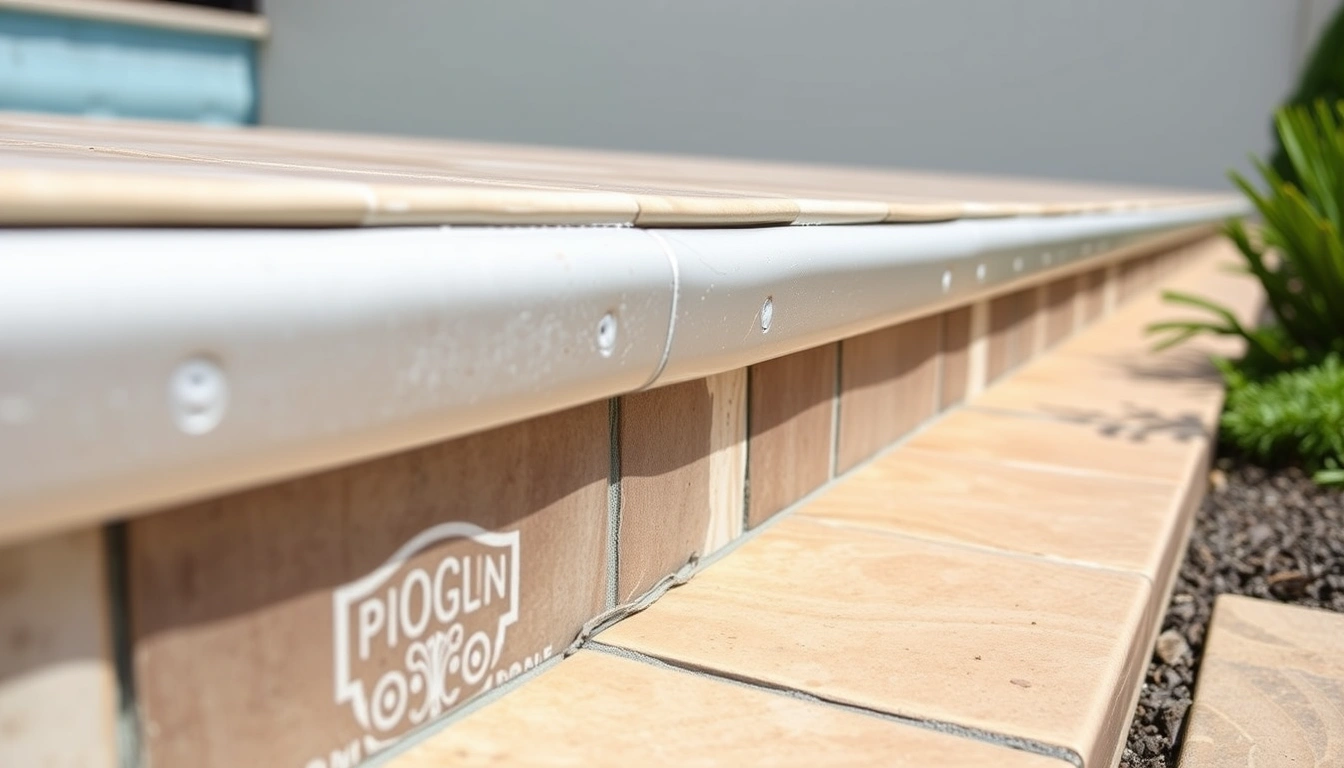
You fix a gap between the coping and the deck by lifting the settled slab back to grade and then rebuilding the expansion joint to the correct 1/2-inch width. Caulking over the gap alone does not solve the problem because the hollow void remains below the surface.
A proper pool coping and waterline settling repair follows a careful sequence. The crew first confirms the coping is sound, then lifts only the settled deck, and finally reseals the seam with a flexible joint.
- Confirm the coping is sound. The coping should not rock. Do not lift if the coping or bond beam is already cracked.
- Drill injection ports in the deck, 12+ inches from the shell. Make sure the ports sit in the deck slab and never through the coping or bond beam.
- Inject foam in small lifts. Watch the coping line as the deck rises. Stop short if the coping begins to move.
- Clean out the old joint. Rout out dried sealant and backer until the edges are clean.
- Set new backer rod. Press closed-cell backer rod to the right depth so the sealant is roughly half as deep as it is wide.
- Apply flexible polyurethane sealant. Tool it slightly concave so it bonds to both sides and sheds water.
In pool coping and waterline settling repair, the finished repair should have a straight, consistent joint line with a flexible bead between the deck and coping. Wavy lines, smeared caulk, and split sealant usually mean the repair will not last.
How do you reseal the waterline expansion joint step by step?
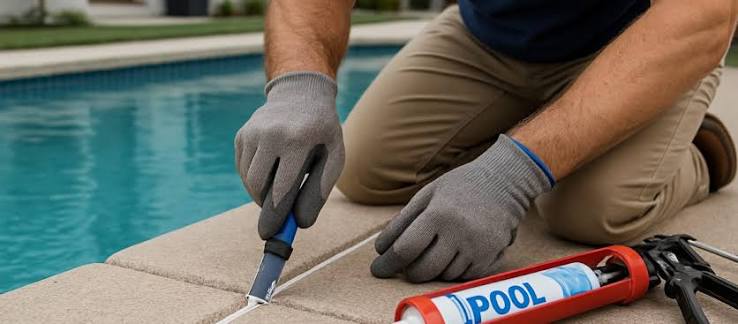
Resealing the waterline expansion joint means removing the old sealant, installing fresh backer rod, and applying a new flexible bead sized to the joint. This is one of the most valuable maintenance tasks in pool coping and waterline settling repair because it keeps water out of the backfill.
Do the work on a dry day with clean, cured surfaces. Replace the joint every 3–5 years, or sooner if you see cracks or gaps.
- Rout the old sealant. Pull it in one strip where possible and keep the coping edge intact.
- Vacuum and dry the channel. Remove debris and moisture before you reseal.
- Install backer rod. Choose rod slightly wider than the gap so it wedges in place.
- Prime or prep the joint if the manufacturer requires it. Follow the sealant label, especially on natural stone coping.
- Gun the sealant in one pass. Fill the joint without trapping air pockets or overfilling the surface.
- Tool the bead concave. A slightly dished profile sheds water and reduces foot traffic damage.
A fresh waterline expansion joint costs a tube of sealant and an afternoon. A neglected one can cost a settled deck, a cracked bond beam, and a four-figure repair.
If your setup is an above-ground pool with a surrounding deck, the joint logic is similar, but the framing differs. For that structure, see above ground pool deck leveling.
Skimmer alignment: the detail everyone gets wrong
Skimmer alignment matters because settling can pull the skimmer throat out of level and disrupt circulation. In pool coping and waterline settling repair, the skimmer should stay within about 1/8 inch of level so the weir door can move freely and the skimmer can read water correctly.
When that tolerance is exceeded, the weir door can stick, the water level in the skimmer mouth can drift, and the rigid PVC around the skimmer can take stress it was not designed to handle.
After lifting the deck, check the skimmer before you seal the joint or finish the surface.
- Set the water level to the middle of the skimmer opening and confirm the weir door swings freely and closes flat.
- Check that the skimmer lid sits flush with the deck so there is no lip to trip on.
- Make sure the skimmer throat stays within about 1/8 inch of level after the lift.
Lifting vs. replacing settled coping
Lifting settled coping is usually the better choice when the coping is sound and the deck has dropped. Replacing everything makes sense only when the coping, bond beam, or shell has already cracked or failed.
This is why pool coping and waterline settling repair often costs less than full demolition. Sound coping can stay in place while the deck is raised, the joint is rebuilt, and the skimmer is checked for alignment.
The repair method also helps preserve matching materials. If the coping is concrete or natural stone in good condition, lifting protects the existing finish instead of forcing a full replacement.
See also: concrete pool deck leveling
See also: pool deck leveling by surface type
See also: above ground pool deck leveling
What causes the gap to come back after repair?
The gap comes back when the joint is left open to water, the sealant fails, or the deck keeps settling because the underlying void was never filled. In pool coping and waterline settling repair, the long-term fix is not just lifting the slab. It is also keeping water from reopening the same edge.
That is why the expansion joint matters so much. A 1/2-inch joint with proper backer rod and flexible polyurethane sealant moves with the deck instead of locking it to the bond beam.
What is the difference between coping repair and deck repair?
Coping repair focuses on the pool edge itself, while deck repair focuses on the slab that sits beside it. They meet at the same seam, but they are not the same job.
In pool coping and waterline settling repair, the deck can be lifted without disturbing sound coping. If the coping or bond beam is damaged, the repair shifts from lifting to structural repair or replacement.
Can a bad expansion joint damage the bond beam?
Yes. A bad expansion joint can damage the bond beam by forcing the deck and coping to move as one rigid unit. When that happens, settling stress no longer releases at the joint and instead pushes into the reinforced top of the shell.
That is why flexible sealant, correct backer rod depth, and proper joint width matter so much. They protect the structure that carries the coping.
Common questions
How wide should the coping expansion joint be?
Keep the coping expansion joint at a consistent 1/2 inch wide so the deck can move without stressing the bond beam.
How far from the pool shell should foam injection points go?
Keep injection points at least 12 inches back from the pool shell and never inject directly under the bond beam.
How often should the waterline expansion joint be replaced?
Replace the polyurethane expansion joint sealant every 3–5 years, or sooner if it cracks, dries out, or separates.
Should the pool be full during deck lifting?
Yes. Keep the pool full during the lift so the water adds ballast against the shell and helps protect the structure.
When should settled coping be replaced instead of lifted?
Replace settled coping when the coping, bond beam, or shell is cracked or unstable. If the coping is sound, lifting the deck is usually the better option.
Conclusion
Pool coping and waterline settling repair works best when you treat the edge as a flexible system, not a rigid slab problem. Lift only the settled deck, protect the bond beam, rebuild the expansion joint, and check skimmer alignment before you finish.
That approach preserves sound coping, reduces the risk of structural damage, and keeps water from reopening the same gap. When the seam is right, the repair lasts longer and the pool edge looks clean again.
See also: pool deck leveling
See also: sinking pool deck repair
See also: pool deck leveling by surface type