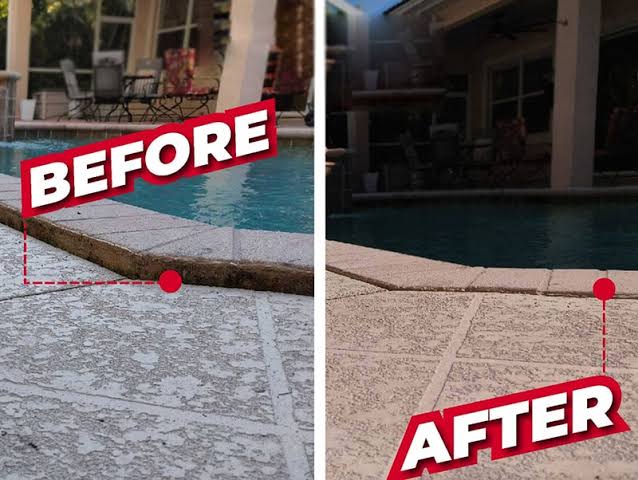
“`html
Re-leveling pool deck after failed lift: how to fix it so it stays fixed
⏱️ 8 min read · Last updated: 2026
When your pool deck drops again after a lift, water, shifting soil, or both destroyed the first fix. Re-leveling pool deck after failed lift work only holds when you correct the underlying cause, not just the low spot. A second lift fails fast when you ignore drainage, washed-out slurry, or void migration beneath the slab. This guide shows you how to diagnose the actual problem, pick the right repair method, and keep the deck stable long after the second lift.
- Re-leveling a slab that settled again after mudjacking, including filling new cracks, typically costs $300 to $800 (Angi, 2026).
- Properly done mudjacking (slabjacking) lasts eight to 10 years; a lift that fails within 12 months points to an unaddressed cause, not bad concrete (HomeAdvisor, 2025).
- Adding drainage correction — French drains, regrading, downspout extensions — commonly runs $1,000 to $5,000 on top of the lift.
- Polyurethane foam injection (polyjacking) costs up to $25 per square foot versus about $6 for mudjacking, and cures in 15 to 30 minutes (Angi, 2026).
- Mudjacking one side of a pool deck (4 to 6 sections) runs around $1,350, and pool decks hide larger voids than most slabs.
A failed lift often points straight back to water. In one case, a neighbor paid $1,350 to mudjack the sunken side of her pool deck, and by the next spring the slab dropped a quarter inch again where the downspout dumped. Re-leveling pool deck after failed lift repairs only last when you fix the water path too.
Source: www.angi.com
That example shows why re-leveling pool deck after failed lift work is not just a rerun of the first job. The surface came back up, but the drainage problem kept eroding the soil beneath, so the slab settled back down. The deck keeps moving when water keeps moving under it.
When a repair fails, the pattern usually tells you why. Slabs rarely sink again because the lifting material was bad. More often, the original void source never got addressed. Find that source, and a second lift can last for years; miss it, and the deck may move again within months.
My leveled pool deck sank again — what went wrong?
Your leveled pool deck sank again because the crew never fixed the reason it failed the first time. Most often, the culprit is drainage failure, washed-out slurry, or void migration. Re-leveling pool deck after failed lift work only sticks when the underlying mechanism is removed.
Water usually gets there first. A bad grade, a leaking downspout, or a cracked joint sends runoff under the concrete, where it carries fine soil away. The slab settles into that gap, then a crew lifts it. If water keeps traveling under the deck, three things can wreck the repair:
- Drainage failure: water still pools against or under the deck, so soil keeps eroding under the fresh lift.
- Washed out slurry: the sand-cement mud from mudjacking (slabjacking) is water-soluble before it fully cures. Groundwater erodes it, and the void reopens.
- Void migration: pumped material fills the near void, but pressure pushes soil and water sideways, opening a new void a few feet over.
A lift that fails within 12 months is a drainage problem wearing a concrete costume. The material almost never fails that fast on its own.
How fast the deck sinks again and where it settles points toward the likely cause. If the deck re-sinks in the same spot within a year, drainage failure or washed out slurry is likely. If it drops in a new spot, void migration is more likely. That distinction matters before any re-leveling pool deck after failed lift decision.
How to diagnose a failed lift before you re-level
Map the movement first, then look at the water, then price the fix. Re-leveling pool deck after failed lift work without this step usually just repeats the same mistake.
Check the water source first
Look for downspouts, low spots, hard runoff lines, and places where water sits after rain. If runoff keeps soaking the same area, the slab keeps losing support there. Drainage correction often matters more than the lift itself.
Compare the old drop to the new drop
Same location means the problem is still active below that area. A new tilt suggests material shifted sideways. That difference helps decide whether the next repair should focus on drainage, void filling, or both.
Inspect for new cracking and joint movement
New cracks show that the slab moved after the first lift or that stress transferred to another section. If the concrete is cracked through, replacement may be smarter than another lift. If the slab is structurally sound, re-lifting is still on the table.
Can a deck be re-lifted after a failed mudjacking job?
Yes, a deck can often be re-lifted after a failed mudjacking job if the slab is still structurally sound. Re-leveling pool deck after failed lift work is a common repair when the concrete has not broken through and the issue traces to drainage or voids rather than total slab failure.
Re-leveling a slab that settled again after mudjacking, including filling new cracks, typically costs $300 to $800. If the contractor needs to add drainage correction, the bill climbs fast.
When re-lifting makes sense
Re-lifting makes sense when the slab is intact, the crew can identify the void source, and the first repair failed because of a fixable outside cause. It also makes sense when the deck only needs a modest height adjustment and the surrounding concrete still lines up well.
When replacement makes more sense
Replacement makes more sense when the slab is cracked through, badly broken, or so far out of plane that lifting would leave unsafe edges. At that point, another lift may not stay fixed no matter how carefully the crew does the work.
Why do some concrete lifts fail within a year?
Concrete lifts fail within a year when the root cause remains active. Properly done mudjacking (slabjacking) lasts eight to 10 years, so an early failure usually means the contractor never corrected the water or soil movement. Re-leveling pool deck after failed lift jobs should therefore start with the site conditions, not the patch.
The most common reason is ongoing drainage failure. Another is washed out slurry, where groundwater erodes the sand-cement mix before it fully stabilizes. A third is void migration, where the material fills one cavity but leaves another cavity ready to take the load.
Pool decks make this trickier because they often hide larger voids than most slabs. Mudjacking one side of a pool deck, usually 4 to 6 sections, runs around $1,350, which reflects the amount of work needed to restore support across a larger area.
Re-leveling pool deck after failed lift: which method to use the second time
The right method depends on why the first lift failed, what shape the slab is in, and how quickly the deck needs to be usable again. Re-leveling pool deck after failed lift work usually comes down to mudjacking, polyurethane foam injection, drainage correction, or some mix of those steps.
| Method | Best for | Cost from article | Timing from article |
|---|---|---|---|
| Mudjacking | Sound slabs with voids that can be refilled | About $6 per square foot | Longer cure than foam |
| Polyurethane foam injection | Fast return to service and tighter void control | Up to $25 per square foot | Cures in 15 to 30 minutes |
| Drainage correction | Active runoff, pooling, and grading problems | $1,000 to $5,000 | Added before or with the lift |
Mudjacking is usually the cheaper choice, and polyjacking is the quicker one. Polyurethane foam injection costs up to $25 per square foot versus about $6 for mudjacking, but it cures in 15 to 30 minutes. If water caused the failure, drainage correction still has to happen either way.
Drainage correction can include French drains, regrading, or downspout extensions. Those fixes commonly run $1,000 to $5,000 on top of the lift, but they are often what keeps the second repair from failing again. Re-leveling pool deck after failed lift work without drainage correction can be false economy.
When the standard advice breaks down
Standard advice breaks down when the slab is already too damaged, the void pattern is irregular, or the pool deck has multiple water sources feeding it. In those cases, re-leveling pool deck after failed lift work needs a site-specific plan instead of a one-size-fits-all fix.
Widespread cracking means one lift may just expose the next weak point. Multiple downspouts, splash zones, or a slope sending water toward the pool edge may require staged drainage improvements. The goal is not just a flatter deck; it is a stable one.
Pool decks also hide problems harder to see than driveway settlement. That is why the same repair method works beautifully on one slab and flops on another. The difference is usually not the pump — it is the water path.
What to do next after a failed lift
Start by identifying the cause, then fix the drainage, then choose the lift method. Re-leveling pool deck after failed lift work succeeds most often when the repair sequence matches the failure sequence. If the slab is sound, re-lift it; if it is cracked through, replace it.
A lift that fails within 12 months usually points to water, not bad material. Drainage correction costs $1,000 to $5,000, mudjacking runs about $6 per square foot, and polyjacking cures in 15 to 30 minutes. The best repair removes the cause before the concrete moves again.
In short, a second lift can last when you fix drainage, check for void migration, and choose the right repair method for the slab’s condition. Re-leveling pool deck after failed lift work is worth doing when the deck is structurally sound and you correct the water problem first.
Common questions
Why did my leveled pool deck sink again?
It usually sank again because the contractor never fixed the underlying cause. The most common causes are drainage failure, washed-out slurry, or void migration.
Can a deck be re-lifted after a failed mudjacking job?
Yes, if the slab is still structurally sound. If the concrete is cracked through or badly broken, replacement may be the better option.
How much does it cost to re-level a slab that settled again?
Re-leveling a slab that settled again after mudjacking, including filling new cracks, typically costs $300 to $800.
How long should a proper mudjacking repair last?
Properly done mudjacking, also called slabjacking, typically lasts eight to 10 years.
How much does drainage correction add to the repair?
Drainage correction such as French drains, regrading, or downspout extensions commonly adds $1,000 to $5,000 on top of the lift.
See also: pool deck leveling by surface type
See also: concrete pool deck leveling
See also: pool deck leveling contractor
Related: surface cost comparison
Related: paver pool deck re-leveling
Related: decorative concrete lift
“`
See also: pool deck leveling by surface type
See also: cost to fix sinking pool deck
See also: pool deck leveling before and after